part IV OLDER & WISER
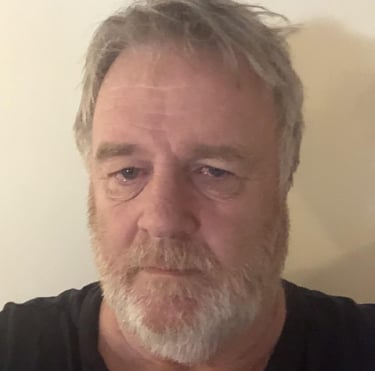
Reflection
Postscript
All of this is conditional. Perspective shifts. It depends on how you wake up, how well you slept, whether the sun is out, or whether your mind is already busy with things you can’t easily set aside. The same situation can look settled one day and unbearable the next.
None of these reflections are fixed truths. They move with mood, energy, and circumstance. Sometimes clarity comes from distance; other times it’s coloured by fatigue or worry. That doesn’t invalidate the view, but it does explain why it changes.
In the end, even the lens itself is not constant.
I Belong Here, and I Miss Standing Alongside the Salt Water
I’m not what people picture when they think of the Northern Territory. I don’t drink much. I don’t smoke. I’ve never needed the pub as an anchor or excess as a badge of belonging. But none of that has ever stopped the place from feeling like home.
I love the Territory for what it is, not what people turn it into. The tropics, the humidity, the way the air sits heavy and unapologetic. You stop fighting it after a while. You learn to move differently, think differently. Discomfort isn’t something to complain about; it’s just part of the arrangement. That suits me.
What draws me most is the movement. People are always passing through. Travellers, tourists, overseas workers, short-term contracts, long-term hopes, quiet escapes. Some stay, some don’t. I’ve never felt the need to hold onto people too tightly here. The Territory teaches you that everyone arrives with a story and leaves with another, and neither needs explaining.
I’ve always felt comfortable on the edges rather than the centre. Islands, remote communities, cyclone zones, places where planning matters and improvisation is a daily skill. Where systems aren’t theoretical but have to work, because if they don’t, people feel it immediately. Out there, ideology counts for less than reliability.
Aboriginal communities have never been an idea to me. They’re lived places. Complex, funny, tiring, resilient, constrained. I don’t romanticise them and I don’t dismiss them either. They are what they are, and you meet them honestly or not at all. Over time, that way of seeing becomes normal, and I think it should be.
The Territory has taught me to value usefulness over visibility. To contribute quietly. To accept that progress is often slow and rarely neat. You learn to be patient, to distrust shiny solutions, and to respect what people can actually maintain once the outsiders move on.
I belong here not because I need to prove anything, but because the place matches my pace. It leaves me alone in the right ways while still asking something practical of me. There’s space to think, room to work, and enough unpredictability to keep you alert without exhausting you.
And when I’m away, I miss the salt water. Standing alongside it, not doing much, not saying much. Just being there, watching the light shift, knowing I’m exactly where I’m meant to be.
That’s how the Territory holds me. Quietly. Without ceremony. And that’s enough.
COMPROMISE
I helped put together an oral history with my grandfather in the mid-1980s. The opening line he wanted was a Bible quotation, or close to it: What does it profit a man if he inherits the earth and loses his soul? I don’t remember the exact wording, but the meaning was clear.
I find myself thinking about that line more often now.
I wonder how many people compromise themselves simply to get by. To pay the bills. To keep things moving. To put parts of themselves on hold because there doesn’t seem to be another option at the time.
It’s probably why some people don’t cope well with those who refuse to compromise. People who are unwilling or unable to do that can be confronting. They don’t fit easily into systems that rely on everyone giving a little bit of themselves up.
Opportunity doesn’t always allow much choice. Life doesn’t usually provide the time, money, or freedom to be as selective as we might like. That has to be acknowledged.
But I still wonder at what point a person knowingly gives up enough of themselves — in work, in relationships, in everyday situations — that their ability to function well and enjoy life is reduced. Not all at once, but gradually.
I don’t have an answer to that. Only the question, and the sense that it matters.
an acceptance of how life works
Maybe it matters because as you get older you start to see the end, not the beginning. That’s not negative or depressing. It’s just an acceptance of how life works.
It’s not about having great wisdom or special insight. It’s more that you’ve lived long enough to notice patterns. With that comes a tendency to look back and question some decisions. Not in a dramatic way, just a quiet wondering about whether some choices could have been made a bit more creatively.
Society keeps going because enough people accept and work within a set of shared norms. Those norms can be wide and flexible, but they still exist, and they serve a purpose. That matters.
At the same time, perhaps a bit more awareness of the room that exists within those norms could have helped. Helped life. Helped choices. Helped me, and probably many others.
But who’s to know.
Most of life isn’t shaped by big turning points. It’s shaped by small ones. Do we cross the road here or there? Do we think about this or that? Do we read something or ignore it? Do we buy the lottery ticket or not? Do we mix with people, or keep to ourselves? Do we join a club, or walk past it? There are thousands of small forks in the road, not always obvious at the time.
As you get older, you realise you’ve seen a lot of those forks. You can imagine where some of the other paths might have led, even though that’s entirely subjective and there’s no way of knowing if they would have been better or worse.
It’s interesting to think about. But living in the here and now is probably still the best way to get through, especially in these times.
Static Systems
It’s not often until you step away that you see how little changes. Systems, both personal and professional, tend to stay where they are. Routines repeat. Processes remain, even when they no longer make sense. People keep doing things the same way, often because it’s easier than questioning them.
If you’re not uncompromising, and if you’re wired to support others, you can spend a lifetime adapting yourself to these systems rather than the other way around. Family dynamics settle into patterns. Work structures harden. Roles become fixed. Over time, the movement slows, and eventually it almost stops.
I’m sure it’s not like this everywhere. But in many places, forward motion is minimal. Change is talked about more than it’s acted on. And some things stay in place simply because no one wants the discomfort of shifting them.
Stepping away gives perspective. You start to see how limiting static systems can be, and how much energy goes into maintaining them. You also realise there’s no external fix waiting. The responsibility sits with you to work through it, to decide what you accept, what you challenge, and what you leave behind.
None of us get this exactly right. The aim isn’t perfection. It’s finding a way through life that causes as little harm as possible, while still making room for yourself. Somewhere in that balance is your own version of zen.
It’s important to say that this view isn’t universal. It’s shaped by my own experiences, accumulated over decades, and it won’t fit everyone. Nor should it. It would be foolish to suggest that my way of seeing things is the right way, or that life somehow comes with a single correct setting.
Most systems that survive do so because something gives. Someone compromises. A process absorbs the strain so the whole thing can keep moving, or at least appear stable. We all do this, in families, at work, in relationships, and in our own internal rules about how things are meant to be. No one stands outside that. There’s no moral high ground in it.
Consistency usually comes at a cost, and that cost is rarely shared evenly. Over time, it becomes normal. The trade-offs fade into the background and stop being questioned. That doesn’t make them wrong, but it does make them invisible.
This isn’t about judging what works or what doesn’t for others. It’s simply an account of how these patterns look from where I stand. Life, seen through my lens, nothing more than that.
Write your text here...